5 Homemade Bug Spray Recipes
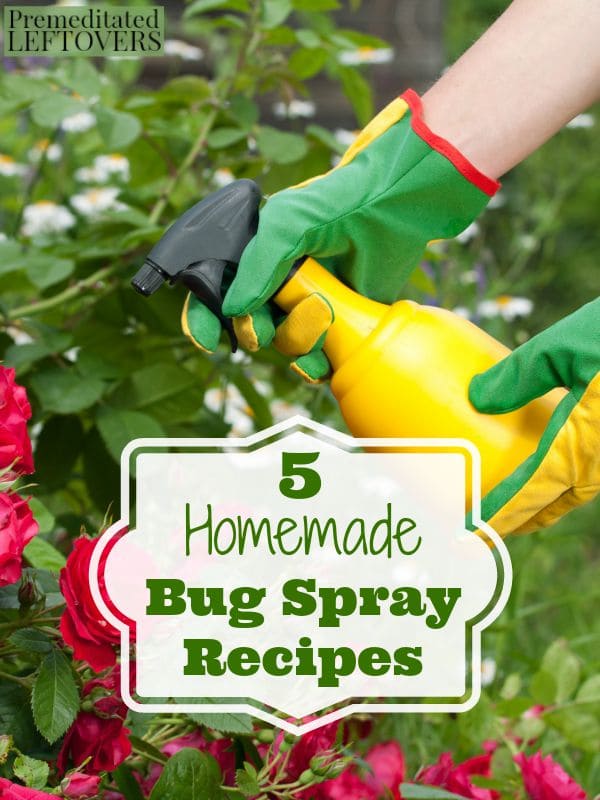
Insects can quickly take over a garden and getting rid of them can run a hefty bill while dousing your harvest in chemicals. You can make many insect repellents for your garden at home for a fraction of the cost without all of the chemicals you do not want around your family. Match one of the DIY insecticides below to your need to help eliminate pests from your home garden.
5 Homemade Bug Spray Recipes
Homemade Pyrethrum Spray Recipe
Insects like aphids and thrips eat away at your garden literally sucking the life out of your plants.
Ingredients:
- ⅔ cup powdered pyrethrum flowers
- 1 gallon water
- 4-5 drops Dawn dish detergent
Instructions: Collect pyrethrum flowers and dry them in the oven on the lowest setting. Store in an airtight container and grind as needed to make a powder. Mix water and powdered pyrethrum together in a jug and shake well. Filter through a reusable coffee filter or flour sack towel. Add soap and spray the plants well in the evening or early morning. If you have outdoor allergies, wear a dust mask while working with pyrethrum powder.
Homemade Leaf Miner Spray Recipe
If you find winding trails in your plants leaves you can get rid of the cause by smothering the leaf miners. You can alter the quantities, but keep the ratio of 2 parts molasses to 6 parts water.
Ingredients:
- 1/4 cup Molasses
- 1 1/2 cups water
Instructions: Combine the molasses and water in spray bottle. Shake well before using and pray on any plants affected by leaf miners.
Ammonia Bug Spray Recipe
Ammonia can help control aphids and whiteflies. You can alter the quantities, but keep the ratio of 1 part ammonia to 8 parts water.
Ingredients:
- 1/4 cup Ammonia
- 2 cups water
Instructions: Combine the ammonia and water in a spray bottle. Shake well before using. Apply gently in a test area and wait overnight to see if it burns the plant. If the plant is doing well the next evening treat the plant with this spray.
Homemade Insecticidal Soap Recipe
You can use this recipe just like commercial insecticidal soaps.
Ingredients:
- ⅛ cup baking soda
- 3 to 4 drops original Dawn dish detergent or castile soap
- 2 cups water
Instructions: Mix well and spray infected plants liberally. Be sure to spray in the evening to prevent the sun from burning your plants.
Hot Pepper Bug Spray Recipe
This helps keep bugs away as well as unwanted animals such as cats, dogs, and rabbits. Wear gloves while working with this one.
Ingredients:
- 1/2 cup pureed hot peppers
- 2 cups water
Instructions: Mix the peppers and water in a spray bottle. Shake well and apply around the areas you want to protect for about a week straight. The bugs and animals you are trying to keep away will lose interest and stop coming around.
Let us know which of these homemade bug spray recipes you have used and share your results with us
5 Homemade Organic Pesticide Every Gardener Must Know
Aphids, spider mites, and other pests can cause serious damage to flowers, fruits, and vegetables. These creatures attack your garden in swarms, literally draining the life from your crops and often inviting disease in the process. Many chemical pesticides can prove unsafe for the environment or may make fruits and vegetables unsafe for consumption, however. Thankfully, there are many homemade, organic options for you to turn to in your war against pests.
1. Neem oil insecticide
An oil extracted from the seeds of the neem tree is a powerful natural insecticide, capable of disrupting the life cycle of insects at all stages (adult, larvae, and egg), making it a great resource for the organic gardener. Neem oil acts as a hormone disruptor and as an “antifeedant” for insects that feed on leaves and other plant parts. Neem oil is biodegradable and is nontoxic to pets, birds, fish, and other wildlife, and is effective against a variety of common garden insect pests, as well as being a natural fungicide that can combat powder mildew and other fungal infections on plants.
It can be found at many garden stores or natural foods markets. To use neem oil as an insecticide, either follow the instructions on the bottle, or start out with a basic mixture of 2 teaspoons neem oil and 1 teaspoon of mild liquid soap shaken thoroughly with 1 quart of water, and then sprayed on the affected plant foliage. Neem oil can also be used preventatively by spraying the leaves of plants that are often ravaged by pests before they’re actually infested.
2. using chilies & Garlic
Combine 1/2 cup (113 grams) of hot peppers with 1/2 cup (113 grams) of garlic cloves or onions. You may also use both onions and garlic. All the vegetables should be chopped prior to use Blend the vegetables together in a blender to form a thick, chunky paste.
Add the vegetable paste to half a liter of warm water mixing the ingredients together Thoroughly. Pour the solution into a plastic or glass container and allow it to sit for 24 hours. If possible, keep it in a sunny location. If not, at least keep the mixture in a warm spot. Next, Pour the solution through a strainer, removing the vegetables and collecting the vegetable-infused water into another container. This water is your pesticide. Pour your pesticide into a squirt bottle and spray on the affected plants
3. Castile Soap Spray
Horticultural soap sprays like this one are a simple way to eliminate small soft-bodied insects like aphids, mealybugs, and spider mites.
This organic pesticide recipe couldn’t be simpler to make – all you need is a natural soap Stir in a tablespoon of the soap to a quart of warm water and spray onto your plants. To boost its pesticide power, consider adding a few drops of one of the essential oils listed above, or a teaspoon of garlic or cayenne powder.
4. orange peels
Peel an orange and Place the peels into a glass container and pour 2 cups (500 milliliters) of boiling water over the peels, Allowing the solution to sit in a warm spot for 24 hours.
Next, Pour the solution into a strainer, removing the peels and saving the citrus-infused water Add a few drops of castile soap. Peppermint-scented castile soap may prove especially effective. Mix the solution thoroughly to combine Pour the pesticide into a large squirt bottle and Spray the entire plant to ward off most soft-bodied pests
5. Essential Oil Blends
Essential oils can be put to great use in the garden. They work to do everything from attracting pollinators to suppressing fungus.
Of course, if used regularly, specific oils can make for fantastic pesticides too:
- Rosemary essential oil helps repel flies, fleas, mosquitoes and insect larvae like the cabbage looper caterpillar.
- Peppermint essential oil eliminates aphids, squash bugs, ants, spiders, beetles, and fleas.
- Thyme essential oil works against biting insects like chiggers, ticks, and roaches.
- Clove essential oil helps deter many flying insects.
- Cedarwood and pine essential oils keep slugs and snails at bay.
Or, for an all-purpose insecticide, mix a teaspoon of vodka with 10 drops of lemon essential oil, 10 drops of eucalyptus oil, 10 drops of cedarwood oil and an ounce of water. Add to a glass spray bottle and apply thoroughly, shaking before each use.

http://balconygardenideas.com/5-homemade-organic-pesticide-every-gardener-must-know/
No comments:
Post a Comment